Our Writing Samples
These excerpts reflect the tone, depth, and storytelling style of our custom biography work.
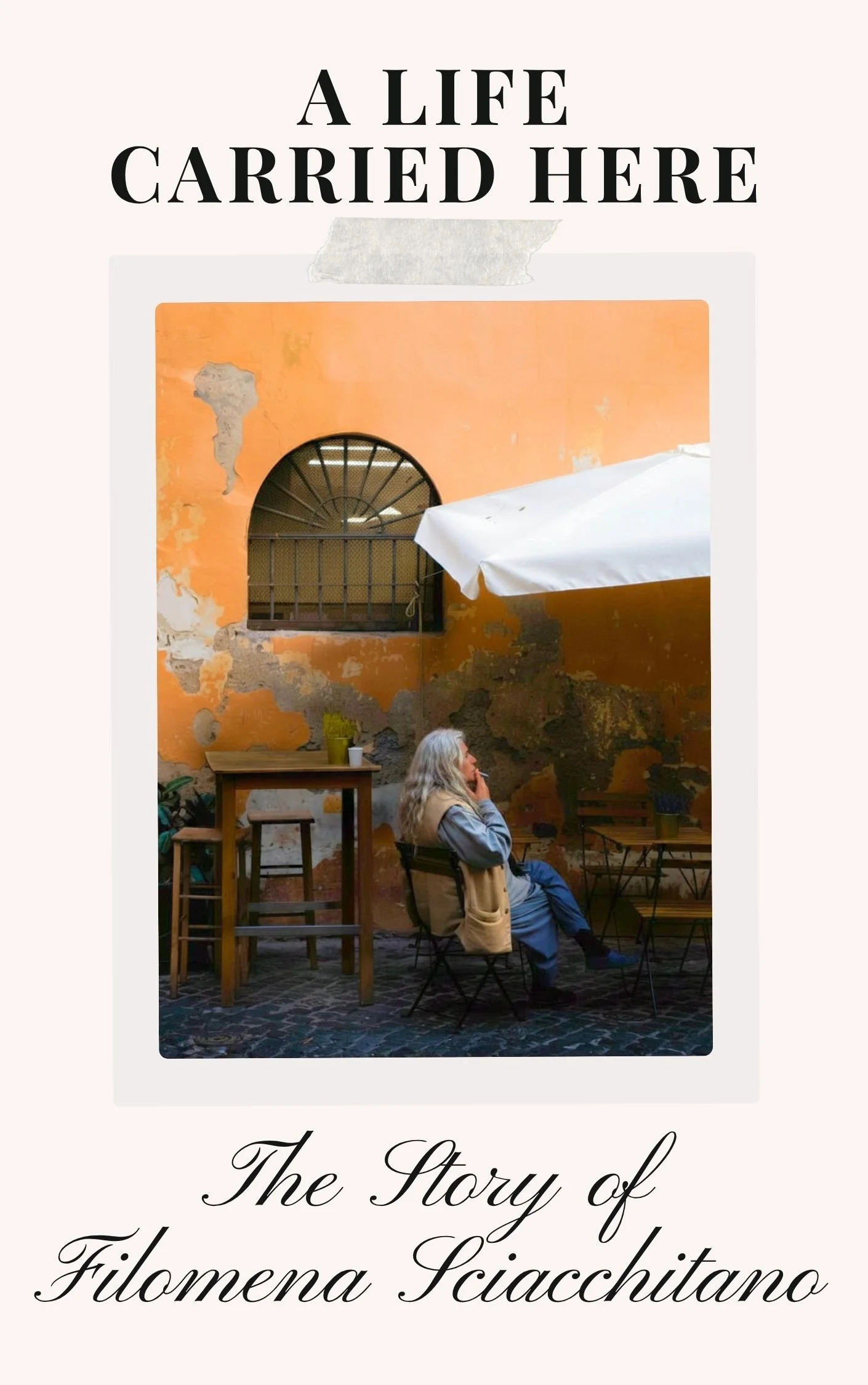
From the pages of: A Life Carried Here — The Story of Filomena Sciacchitano
Immigration story
She was twenty years old and she was alone, which was the first thing the other passengers noticed about her.
Women did not make this crossing alone. That was simply understood. They came with husbands, with brothers, with fathers — with someone whose name they could stand behind when the questions started. Filomena had none of that. What she had was a single traveling case, a letter from a cousin in New York she had met only once, and the particular stubbornness of a woman who had decided that the life waiting for her in Calabria was not the life she intended to live.
The crossing took seventeen days.
She spent most of them on the lower deck, in steerage, where the air was close and the sea made itself known in ways no one spoke of afterward. She slept when she could. She ate what was given. She watched the water and thought about very little, because thinking too far ahead in any direction felt dangerous.
On the morning the ship moved into New York Harbor, she came up on deck with the others and stood at the railing.
She did not cry. She had not expected to.
What she felt was something quieter than relief and larger than hope — something that did not have a name in Italian or in any other language she knew.
Ellis Island was not gentle. She was moved through rooms, examined, questioned through a translator who spoke her dialect imperfectly and did not seem to notice. She answered everything asked of her. She stood straight. She did not sit down until she was told she could.
When the inspector reached her name on the manifest, he attempted it once.
Filomena Sciacchitano.
He looked up at her. He wrote something down.
The paper he handed back read: Florence Shackett.
She looked at it for a long moment. She had not been asked. That was the thing she would carry longest — not the name itself, but the fact that no one had asked.
She folded the paper carefully and placed it in her coat pocket.
Then she walked through the door and into America, answering to a name that was not hers, in a country that did not yet know what it had.
She had not come this far to be undone by a name.
Filomena Sciacchitano crossed an ocean alone and arrived as someone else. Florence Shackett built a life anyway — quietly, deliberately, with the kind of strength that does not announce itself but never runs out.
Everything her family would one day take for granted, she carried here first. Now they can understand her life more fully and read the story the way it was meant to be told.
From the pages of: A Life Well Built — The Story of Thomas Edward Callahan
Family Legacy
The errand had taken him into Waterbury, which was not his preferred way to spend a Tuesday.
He navigated the city streets the way a man does when he knows them well enough but has never made peace with them — efficient, unhurried, his hands easy on the wheel. The truck moved through the familiar noise of the afternoon, past storefronts and crosswalks and the particular rhythm of a city going about its business, and Thomas went with it, his mind already somewhere further down the road.
That was when he saw her.
She was walking with a friend, moving down the sidewalk with the kind of ease that is not learned — the kind a person is simply born with. Dark hair fell down her back, and she carried herself with the kind of ease that makes a person seem, at first glance, entirely sure of the world. He noticed it the way you notice something that does not fit the ordinary texture of a day — the way a song you did not expect stops you mid-thought.
He slowed the truck.
He was not entirely sure what he intended to do. Thomas was not a man given to gestures like this. But the moment had a weight to it, and he had learned, over the course of a life spent reading what was in front of him, to trust that kind of weight.
He pulled to the curb.
She glanced over when the door opened — not startled, just looking, the way a woman looks when she is perfectly comfortable and has no reason not to be. He introduced himself. He asked if she would go dancing with him that weekend.
Her name was Catherine.
She considered him for a moment — this tall, broad-shouldered man standing beside a truck in the middle of a Tuesday afternoon, entirely serious, entirely certain — and she said yes.
He drove away thinking about Saturday.
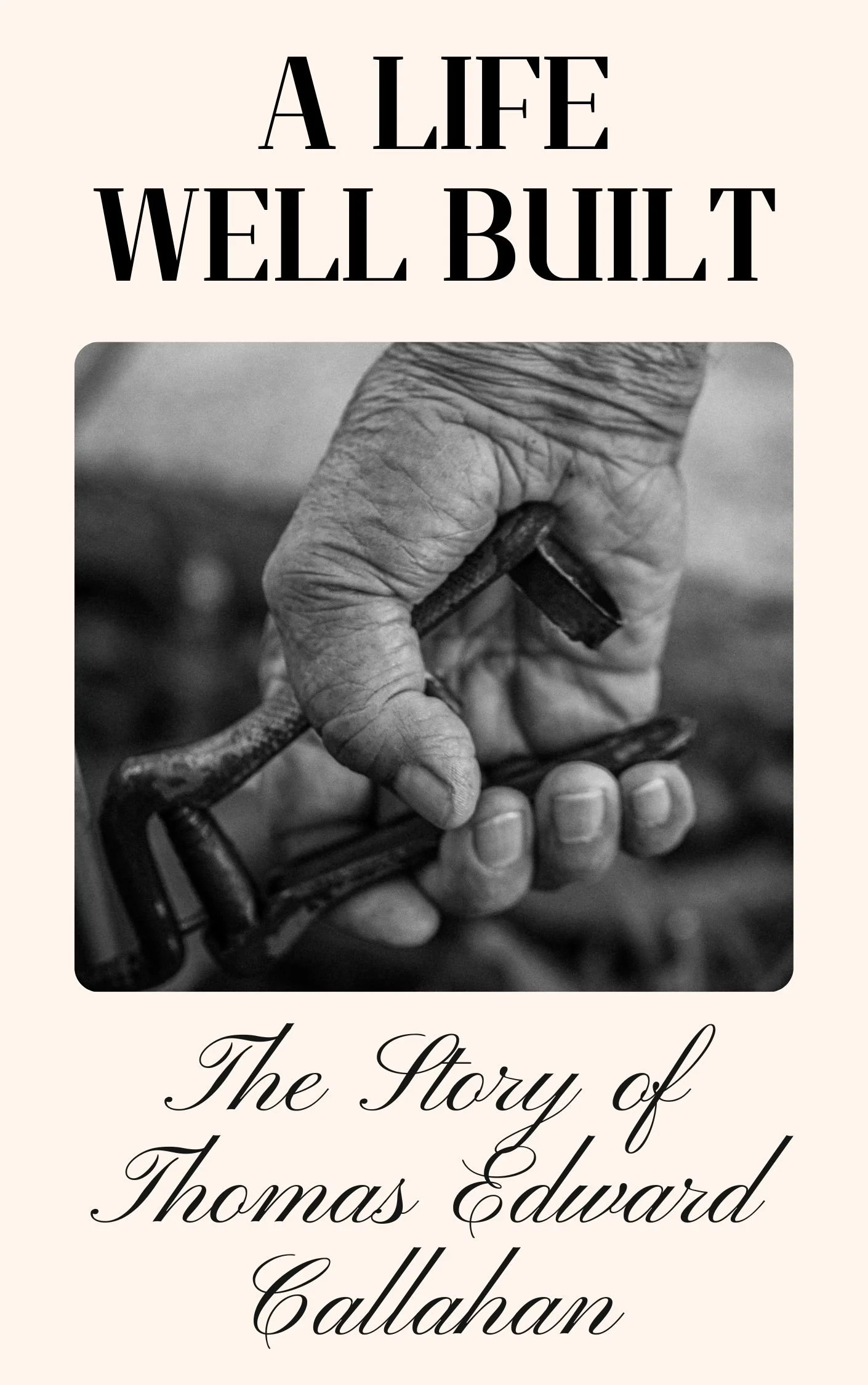
He was not extravagant with words, but neither was he careless with them. What he said, he meant. What he meant, he meant for good.
Decades later, in a kitchen in Connecticut, he still reaches for her hand as though that first yes is still echoing somewhere in the room.
Thomas has chosen to pass down his story so his grandchildren can one day know the life he lived in the words only he could have given it.
Every life holds a story this worth telling.
Some are love stories. Some are stories of courage. Some are both.
At In Words Forever, we find the story inside the life — and we write it down in a way your family will hold onto forever.
Excerpts shared with permission from the individuals or families involved.